How Much Sun Does Your Roof Get? 7 Ways to Find Out
If you are thinking about solar panels, choosing a roofing material with reflective properties, or trying to understand why your home runs hot in summer, the answer starts with one question: how much sun does my roof get? In New Mexico, the answer is almost always “a lot,” but the specifics vary by roof orientation, pitch, shading, and your home’s position on the lot. Knowing your roof’s actual sun exposure helps you make smarter decisions about everything from energy efficiency to roofing material selection. Here is what this guide covers:
- Why roof sun exposure matters beyond solar panels
- The 7 most reliable ways to measure or estimate it
- How pitch, direction, and shading affect the results
- What the numbers mean for New Mexico homeowners
- How sun exposure informs your next roofing decision
Why Roof Sun Exposure Matters

Most homeowners do not think about their roof’s sunlight exposure until they are evaluating solar panels. But the amount of sun your roof receives affects far more than energy production. In Albuquerque’s climate, where UV radiation is intense year-round and summer temperatures push into the 90s, sun exposure is one of the primary forces driving roofing material degradation, attic temperature, and home energy costs.
A south-facing roof that receives full sun most of the day ages materials faster than a north-facing slope on the same block. The shingle colors, underlayment, attic ventilation, and roof coating reflectivity all interact with how much solar radiation your roof absorbs and how much power it could generate if you added solar energy systems in the future. For context, the average U.S. roof can generate about 21,000 kWh annually under ideal conditions — a useful benchmark when thinking about your home’s solar potential. Understanding your exposure gives you a factual baseline for smarter decisions on materials, ventilation, and whether solar makes sense for your home.
7 Ways to Find Out How Much Sun Your Roof Gets
You do not need to be a solar engineer to get a reliable sense of your roof’s sun exposure. The tools and methods below range from free online calculators to simple physical observations you can complete in an afternoon, giving you multiple ways to cross-check the answer for your specific home.
1. Use Google Project Sunroof
Google Project Sunroof is one of the most accessible tools for homeowners who want an accurate estimate of their roof’s solar exposure. It uses high-resolution aerial imagery and LIDAR data to build a 3D model of your specific roof, then calculates how much sunlight hits your roof space throughout the year, factoring in tilt, orientation, and nearby obstructions like trees and neighboring buildings.
You enter your address, and the tool returns an estimated annual sun hours figure along with a visualization of which parts of your roof receive the most usable sunlight and which get the least. Many home listings and solar tools also display a Sun Number score, which ranges from 0 to 100 as a quick summary of a home’s solar potential. For Albuquerque homeowners, both metrics typically return some of the highest values in the country.
2. Check the NREL PVWatts Calculator
The National Renewable Energy Laboratory’s PVWatts Calculator is the professional-grade tool solar installers and energy analysts use to estimate rooftop solar production. According to the U.S. Department of Energy, PVWatts estimates the energy production and cost of electricity for grid-connected photovoltaic systems throughout the world. It draws on NREL’s National Solar Radiation Database, which contains decades of validated data for every U.S. location.
3. Observe Your Roof’s Orientation and Pitch
Before using any digital tool, a simple physical assessment gives you a strong starting point. Roof orientation, pitch, size, and shape are the most influential factors in determining sun exposure and how much energy your roof could generate. Roof size in particular affects how much surface area is available for solar panels. All four are easy to evaluate without any equipment.
- South-facing slopes: In the Northern Hemisphere, south-facing planes receive the most direct sunlight year-round. A south-facing roof in Albuquerque is typically the highest-exposure surface on the home.
- North-facing slopes: Receive significantly less direct sun, especially in winter when the sun’s angle is lower. These age more slowly but produce far less solar energy.
- East and west-facing slopes: Get moderate sun split between morning and afternoon. East-facing roofs run cooler in summer by avoiding intense afternoon exposure.
- Roof pitch: Steeper south-facing pitches capture more direct radiation in winter. A flat roof or low-slope surface receives more consistent year-round exposure but less optimal seasonal angles.
4. Use SunCalc to Track Sun Position by Season
SunCalc.org is a free tool that shows the sun’s path across the sky for any location and date. Enter your address and see where the sun rises and sets, how high it gets at solar noon, and how those angles shift between seasons. Combined with your local weather patterns, it helps identify which parts of your roof will be shaded at different times of year.
For New Mexico homeowners, SunCalc confirms what most already sense: the sun tracks high and south in summer, lower through the southern sky in winter. A roof with no obstructions to the south receives near-maximum solar exposure year-round.
5. Assess Tree and Structure Shading
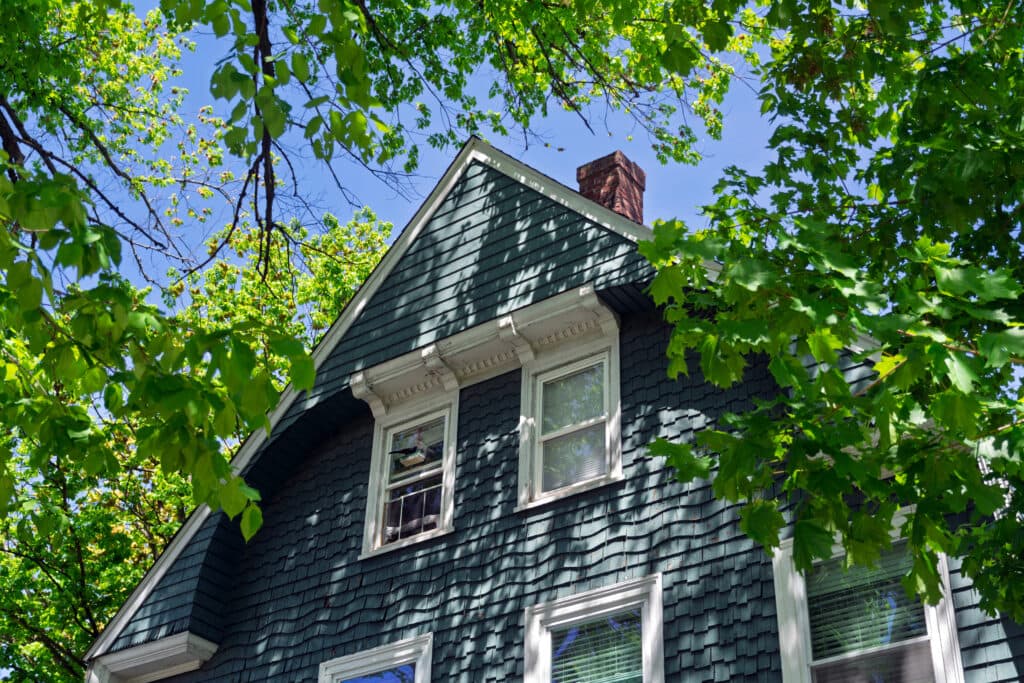
Shading is the factor that most frequently reduces a roof’s sun exposure below what orientation and pitch would suggest. Roof obstructions like mature trees, chimneys, dormers, and neighboring structures can meaningfully reduce a section’s effective exposure during peak sun hours. Walk your property at midday and observe which parts of your roof are in full sun and which sit in shadow.
- Morning shading: Trees or structures to the east block early sun but have little effect on afternoon heat load.
- Afternoon shading: Objects to the west create shade during the hottest part of the day, meaningfully reducing attic temperatures and cooling loads.
- Year-round shading: Structures to the south are the most impactful, since they block sun during the hours when solar intensity is highest.
6. Consult a Solar Site Assessment
For a precise, professionally measured figure, a solar site assessment or full solar analysis from a licensed installer delivers the most accurate results. These assessments use calibrated instruments and shade analysis software to measure actual irradiance at your roof surface. Many solar companies offer preliminary assessments at no cost, and the data is useful for any roofing decision even if solar is not your goal.
7. Review Your Utility Bills and Attic Temperature
A less precise but immediately available indicator is your home’s energy performance. A roof absorbing significant solar radiation drives up attic temperatures and shows up in summer electric bills. If your attic regularly exceeds 130 to 150 degrees on summer afternoons, your roof is taking in substantial solar energy. Comparing your summer cooling costs to neighbors with similar homes in different orientations gives you a meaningful sense of how much sun your roof is absorbing.
We are proud to serve home and business owners in Albuquerque, NM, and nearby communities including Rio Rancho and Santa Fe with professional roofing services, inspections, and energy-efficient roofing options and more.
How Sun Exposure Should Inform Your Roofing Decisions
Once you know your roof’s sun exposure, that data becomes actionable across several important decisions.
- Roofing material selection: High-exposure south-facing roofs benefit from reflective or cool-roof-rated materials. Metal roofing and light-colored shingles with reflective coatings can reduce attic temperatures by 20 to 30 degrees compared to dark asphalt, translating to real cost savings on summer cooling bills.
- Shingle color choice: Dark shingles absorb more solar radiation than light ones. On a high-exposure roof in Albuquerque’s climate, the color difference translates into a measurable difference in attic temperature and cooling costs over time.
- Attic ventilation: Roofs with high sun exposure need properly sized ventilation to exhaust the heat that builds up during the day. Undersized ventilation shortens shingle lifespan and raises cooling costs.
- Solar panel viability: A roof with strong south-facing exposure and minimal shading can generate more power per square foot than a shaded or poorly oriented surface. A north-facing roof with heavy tree coverage may not justify the investment.
Frequently Asked Questions About Roof Sun Exposure
Homeowners in Albuquerque and Rio Rancho ask these questions most often about roof sun exposure and what it means for their home.
How many peak sun hours does Albuquerque receive?
Albuquerque is one of the sunniest cities in the United States, averaging 5.5 to 6.5 peak sun hours per day depending on the season and roof orientation. Peak sunlight hours usually occur between 10 AM and 4 PM local time, when solar irradiance averages 1,000 watts per square meter. This places Albuquerque among the top markets in the country for both solar energy production and UV-related roofing material wear.
Does more sun mean my roof will wear out faster?
Yes, in most cases. UV radiation and heat cycling break down roofing materials over time. A south-facing roof in Albuquerque with full sun exposure typically shows wear faster than a north-facing slope on the same home. Choosing UV-resistant materials and reflective coatings helps offset this effect.
Should I choose a lighter or darker roof color if my roof gets a lot of sun?
Lighter colors and reflective finishes are the better choice for high-exposure roofs in hot climates. They reflect solar radiation rather than absorbing it, keeping attic temperatures lower and reducing strain on your cooling system. In Albuquerque’s climate, this choice meaningfully affects both comfort and energy costs.
How does roof pitch affect sun exposure?
Pitch determines the angle at which your roof faces the sun. A steep south-facing pitch captures more direct sunlight during winter months when the sun is low. A shallow pitch receives more consistent year-round exposure. For solar panel installations, a pitch of 30 to 40 degrees on a south-facing surface is generally optimal for New Mexico’s latitude.
Make Smarter Roofing Decisions With Cabezon Roofing
Understanding your roof’s sun exposure is not just a solar panel question. It is a roofing question. The materials you choose, the colors you select, and the ventilation your attic needs all flow from how much sun your roof absorbs every day. Cabezon Roofing helps homeowners across Central New Mexico make informed decisions about every aspect of their roof.
Connect with our team today to schedule your free roof inspection and start making smarter decisions about your home’s most sun-exposed surface.